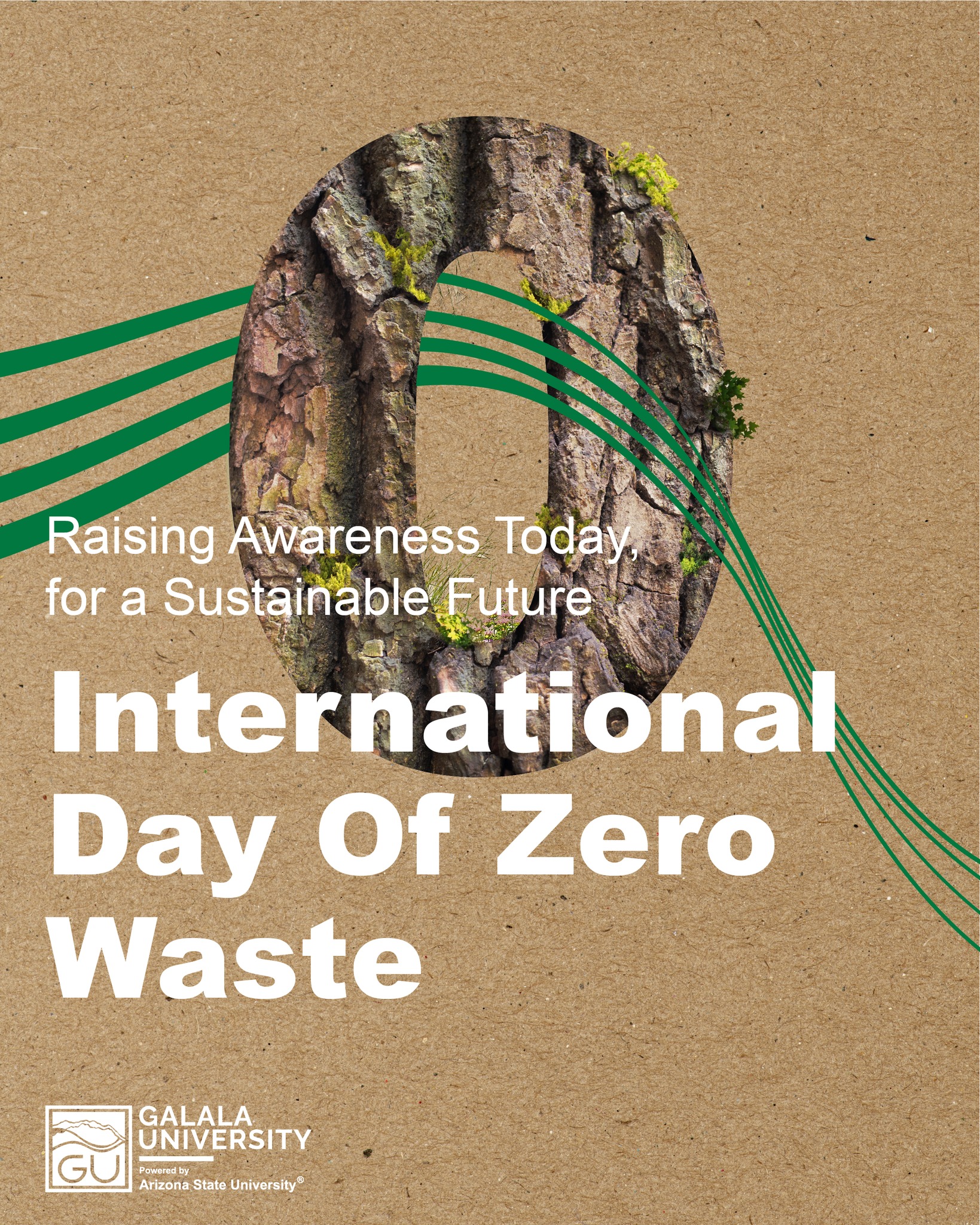
Galala University marked the International Day of Zero Waste with a campus-wide awareness drive under the theme “Small Changes, Big Impact,” spotlighting how everyday habits can meaningfully reduce waste and protect natural resources. The initiative rallied students, faculty, and staff around practical actions that anyone can adopt immediately—avoiding single-use plastics, reusing and repairing items, choosing durable and recyclable products, and making mindful choices about water and energy consumption.
Throughout the day, the university’s digital channels amplified simple, high-impact practices: carrying a reusable bottle or cup; preferring bulk and package-free options; sorting waste correctly; and switching off lights, AC, and devices when not in use. Posts and stories linked these actions to the broader goals of climate mitigation and sustainable urban living, reinforcing that “zero waste” is not perfection, but continuous improvement. On campus, engagement touchpoints translated the message into hands-on behavior. Awareness booths shared tips on reducing packaging and food waste; signage clarified what belongs in each bin; and “repair, refill, repurpose” stations showcased how common items can be given a second life. Volunteers guided peers on where to find water refill points and how to opt out of disposable cutlery during food purchases.
Academic departments and administrative units joined in by highlighting course projects, research ideas, and operational practices aligned with waste reduction. Student clubs and ambassadors encouraged peers to take a simple three-step pledge—refuse, reduce, and reuse—and to track one habit change for a week (for example, replacing a daily plastic bottle with a refillable one). Facilities teams reinforced the campaign by emphasizing correct segregation and reminding community members that clean, sorted recyclables have a far higher chance of being recovered than mixed waste.
The initiative also drew attention to the connection between personal choices and community-scale impact. Reducing single-use materials supports more livable campuses and cities (SDG 11), while cutting waste at the source lowers carbon footprints and supports climate action (SDG 13). Responsible purchasing and consumption patterns (SDG 12) lessen pressure on ecosystems and biodiversity (SDG 15). Finally, the effort underscored partnerships (SDG 17): progress depends on coordinated action among students, staff, vendors, and local stakeholders who share the same sustainability commitments.
“Small Changes, Big Impact” concluded with a call to maintain momentum beyond a single day. The university encouraged everyone to keep using reusables, to plan meals to limit leftovers, to print only when necessary, and to share successful habits with others. By turning awareness into routine, the Galala community contributes to a cleaner, greener, and more sustainable future—and sets a visible example of how higher education institutions can align daily operations, student life, and outreach with the UN Sustainable Development Goals.