World Blood Donation Day – Faculty of Applied Health Sciences
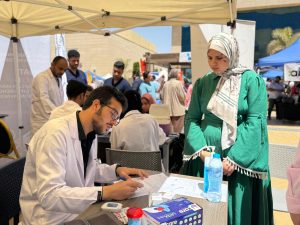
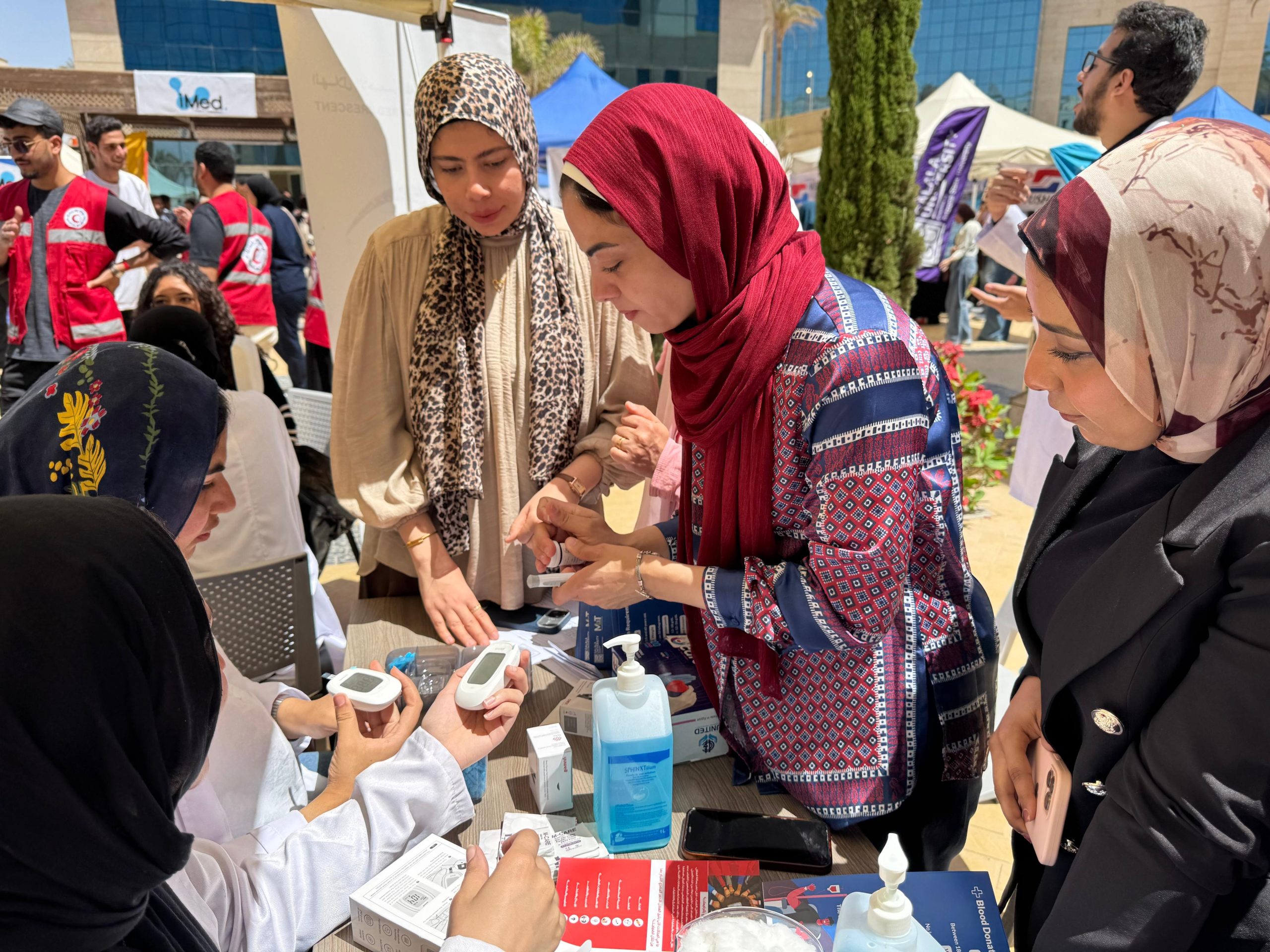
The Faculty of Applied Health Sciences turned World Blood Donation Day into a hands-on learning moment at Galala University, hosting an awareness and skills event in front of the Faculty of Administrative Sciences. Guided by faculty mentors, students walked through the full pathway of a safe donation campaign—what happens before, during, and after a donation—and why each step matters for patient safety and public health.
Interactive stations broke the process down into clear, practical checkpoints: eligibility screening and informed consent; vital signs and hemoglobin checks; infection-control and aseptic technique; labeling and chain of custody; post-donation hydration and observation; and community outreach basics (clear messaging, donor privacy, and myth-busting). Case mini-scenarios helped students practice conversations with would-be donors—how to explain deferral criteria, calm anxiety, and give post-care instructions. Short demos on sharps disposal, incident reporting, and cold-chain fundamentals reinforced the operational standards expected in clinical settings.
Faculty members tied each activity back to classroom objectives in physiology, microbiology, and public health. Students logged competencies on checklists and reflected on how evidence-based protocols reduce adverse events and build trust in donation drives. The event also emphasized the ethics of donation—voluntarism, non-remuneration, and respect for confidentiality—linking professional behavior to the credibility of any campus or community campaign.
World Blood Donation Day at GU is part of a broader approach to learning by doing: translating theory into safe practice, and community service into a training ground for future health professionals. In line with the university’s direction under Prof. Dr. Mohamed El-Shinawi, the day underscored a simple message—well-trained graduates serve society better when they master both technical standards and humane communication.
By centering safety, competence, and outreach, the event advanced sdg3 (Good Health and Well-being) through stronger public-health literacy and safer donation workflows; sdg4 (Quality Education) by embedding competency-based, simulation-rich training; and sdg17 (Partnerships for the Goals) through a framework ready for collaboration with hospitals and blood banks in future activations.