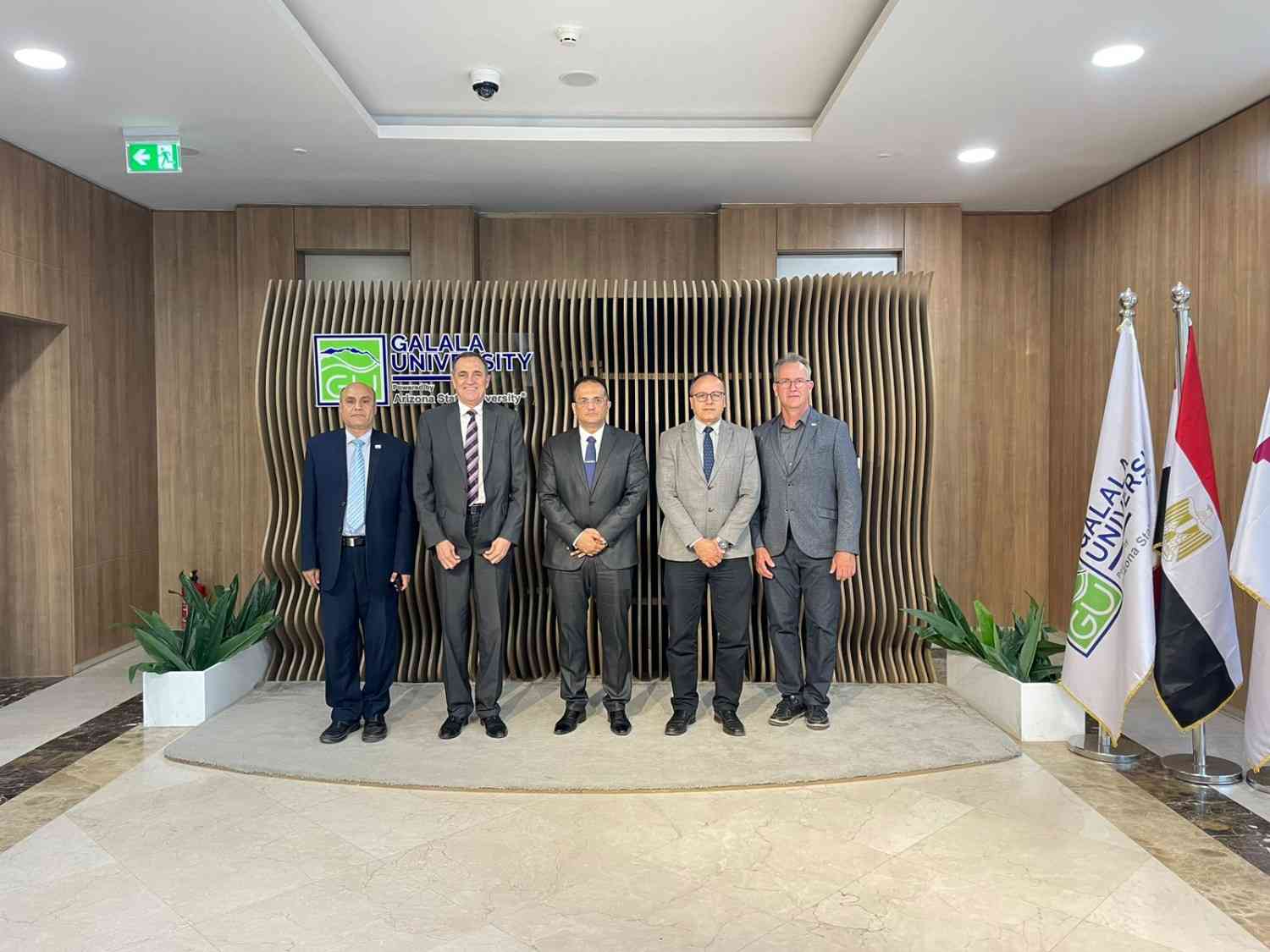
Human Study Delegation Visit – Prosthetics Program Development Workshop
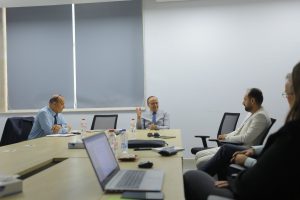
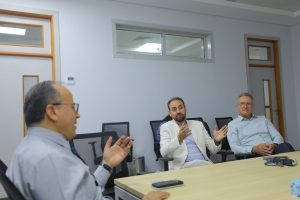
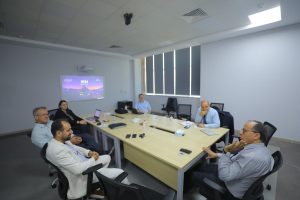
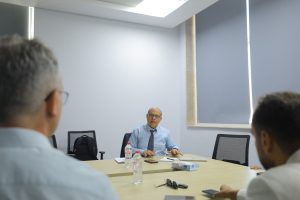
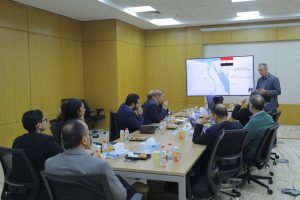
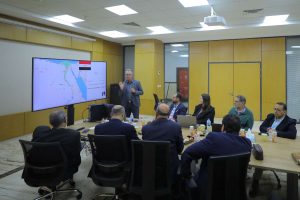
A full studio of test sockets, alignment jigs, and gait videos set the tone as Galala University’s Faculty of Applied Health Sciences hosted a two-day development workshop with the Human Study Foundation (Germany)—a working visit designed to move the Prosthetics & Orthotics Program from plan to practice. Sessions combined high-level roadmap setting with hands-on lab time, aligning curriculum, clinical competencies, and accreditation standards with international benchmarks.
Who was in the room
-
Human Study Foundation: Mr. Christian Schlierf (Founder & CEO); Mr. Marcelo Alvarez (Director of Prosthetics & Orthotics; Head of Faculty & QA); Ms. Irina Karamicic (Project Manager); Mr. Amr Gharib (P&O Expert).
-
New Cairo Technological University: Dr. Tarek Abdel Malak (President); Dr. Minerva (P&O Program Director); Dr. Yasmine (Physiotherapy Lecturer); Dr. Mohamed Medhat (Lecturer).
-
Honored guest: Prof. Dr. Ahmed El-Geoushy, Advisor to the Minister of Higher Education for Technological Universities.
What we worked on
-
Curriculum & competencies: mapping learning outcomes to clinical tasks—casting, socket design, myoelectric control basics, digital scanning, and evidence-based fitting; tightening OSCE stations and competency checklists.
-
Lab standards: needs assessment for gait analysis, pressure mapping, lamination/vacuum systems, safe materials workflows, and preventive maintenance; SOPs for calibration and incident reporting.
-
Clinical pathways: agreements for supervised placements, multidisciplinary case reviews, and patient-reported outcome measures; ethics and data privacy in line with national guidance.
-
Faculty upskilling: a train-the-trainer plan (modules, micro-credentials, peer observation) so knowledge scales to new cohorts without diluting quality.
-
Quality & accreditation: documentation packs for external review—syllabi matrices, KPI dashboards (competency attainment, supervised case counts, lab uptime), and continuous-improvement cycles.
“Our focus is simple: patient comfort and function. Every tool, module, and metric points to that,” one expert noted during a socket-fit debrief.
The visit also explored applied research with clear local impact—lightweight composite layups suited to Egypt’s climate, residuum–socket interface optimization, and community-based rehabilitation models that improve follow-up and device longevity. These themes connect GU’s labs to partner clinics and vendors, accelerating technology transfer and student exposure to real-world constraints.
This workshop reflects Galala University’s direction: applied, standards-driven education that produces graduates ready for clinical teams and medical-device workflows in Egypt and the region. It also strengthens international collaboration channels, ensuring that program upgrades are auditable, scalable, and centered on patient outcomes.