Visit of the Texas International Education Consortium (TIEC) Delegation to Galala University
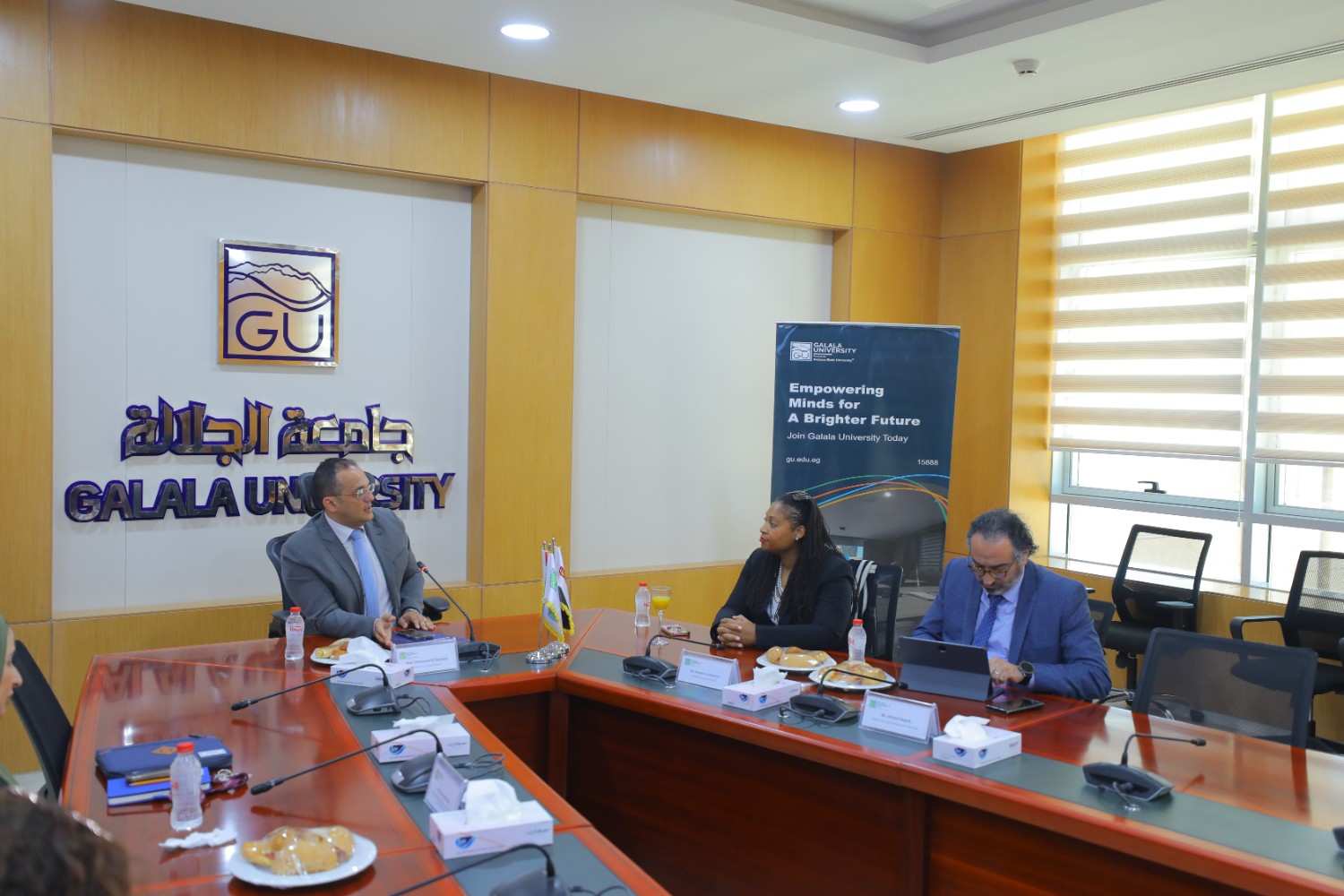
Partnerships that open classrooms to the world don’t happen by accident—they’re built at the table. Galala University welcomed a delegation from the Texas International Education Consortium (TIEC) for an official meeting chaired by Prof. Dr. Mohamed El-Shinawi, President of Galala University, to chart practical avenues for collaboration that serve students and faculty on both sides.
In attendance from TIEC were Ms. Deneyse A. Kirkpatrick, President & CEO, and Mr. Ahmed Naguib, Director of Global Business Development. Discussions moved quickly from introductions to executable workstreams, with four tracks emerging:
-
Joint academic programs: mapping GU strengths to TIEC member universities for dual/combined degrees and co-taught modules, with an emphasis on clear credit articulation and quality assurance.
-
Research cooperation: forming small, focused clusters (health & biosciences, engineering & computing, sustainability & urban studies) to pursue co-authored papers, shared datasets, and reciprocal lab access.
-
Faculty and staff exchange: short-term residencies, visiting lectureships, and instructional design sprints to modernize syllabi and assessment.
-
International training & micro-credentials: industry-aligned short courses and summer institutes hosted in Egypt and Texas, designed around applied skills and employer needs.
“Our objective is simple: partnerships that translate into opportunities—places to study, to research, and to build careers,” Prof. Dr. El-Shinawi noted, framing the meeting within GU’s global engagement strategy.
To keep momentum, both sides agreed on an action memo: each track will nominate coordinators, build a 90-day timeline, and define success metrics (student/faculty mobility numbers, co-taught course pilots, joint grant submissions). A follow-up virtual session will finalize program pairings and calendar the first exchanges.
The visit underscores Galala University’s approach to internationalization—purposeful, standards-driven, and outcomes-focused—so learners feel the impact in the classroom, the lab, and the job market.