Human Microbiota and Gut Health Seminar
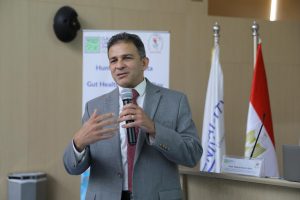
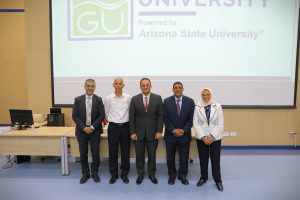
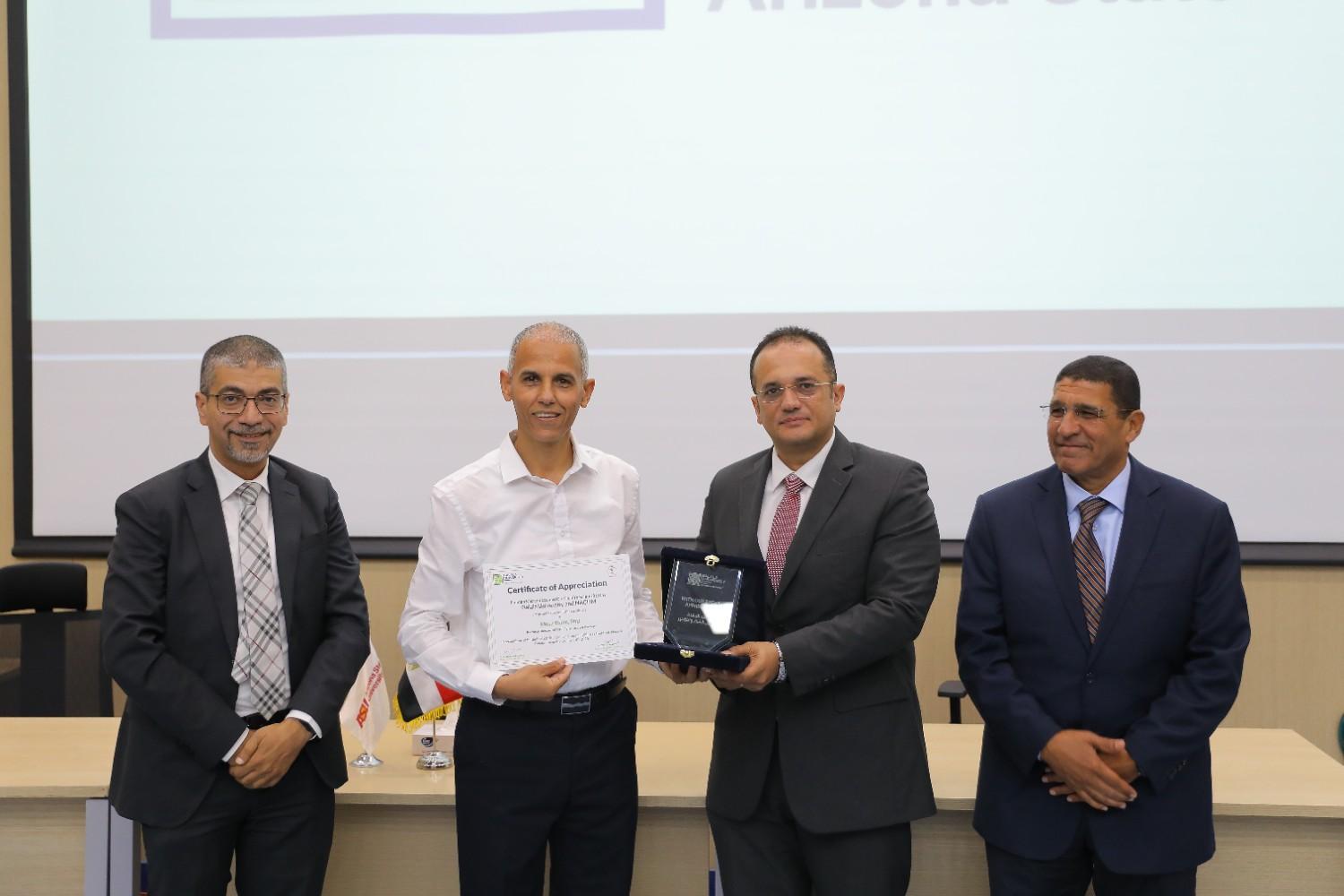
What does a healthy gut sound like in data? Over two days at Galala University, that question anchored a deep dive into microbiome science with Prof. Dr. Mouaz Alraihimi (INRAE, France), joined by leading Egyptian scholars across microbiology, biochemistry, and computational biology. The program blended big-picture insight with lab-grounded practice—linking microbiota composition to immunity, nutrition, and the promise (and limits) of personalized medicine.
Day 1 — Lab doors open, collaborations begin
Faculty tours through Basic Sciences, Medicine, and Applied Health Sciences set the stage for joint work. Discussions focused on:
-
Metagenomics pipelines: sample collection to shotgun sequencing; contamination control; reproducible bioinformatics.
-
Biobanking & data governance: consent models, de-identification, and long-term storage standards that make studies comparable across sites.
-
Translational angles: dietary interventions, microbiota–immune crosstalk, and biomarker discovery relevant to Egypt’s context (e.g., metabolic syndrome, pediatric nutrition).
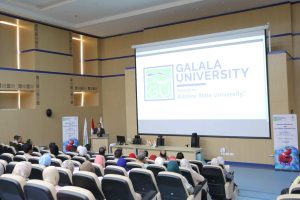
Day 2 — Auditorium 1, Faculty of Administrative Sciences
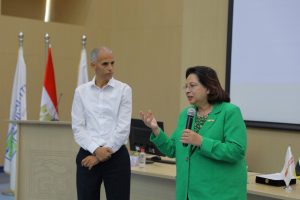
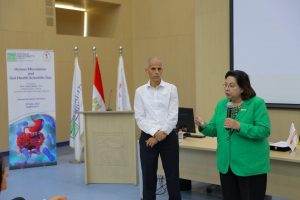
A full seminar program featured keynotes and panels with:
-
Prof. Rami Karam Aziz — Professor of Microbiology & Immunology, Cairo University; Head, Mark BioLabs
-
Prof. Amani Maher — Professor of Biochemistry & Molecular Biology, MASRI Institute (Ain Shams University); Executive Director, MASRI Biobank
-
Prof. Samar Kamal Kassem — Professor Emeritus of Medical Biochemistry & Molecular Biology; Head, Computational Biology Unit, MASRI Institute
Talks traced the arc from microbiome profiling and host–pathogen dynamics to AI-assisted pattern discovery, emphasizing how study design, cohort size, diet logs, and metadata quality determine whether findings travel from paper to clinic. A recurring theme: avoiding hype. Speakers distinguished validated associations (e.g., antibiotic exposure and community shifts) from correlations that need causal testing, and they stressed patient safety when translating probiotics or dietary advice into practice.
What GU faculty and students take forward
-
A starter protocol pack for microbiome projects (collection kits, SOPs, bioinformatics notebooks).
-
A shortlist of multi-institution studies (metabolic health, inflammatory markers, early-life nutrition) with MASRI Biobank linkages.
-
Opportunities for co-supervised theses, visiting lectures, and data-sharing under clear ethical frameworks.
-
Strengthening of GU’s computational capacity for omics—versioned workflows, containerized tools, and training on interpretation (not just pipelines).
The seminar fits Galala University’s research posture: rigorous, collaborative, and impact-oriented. By convening INRAE expertise with Egypt’s biobanking and computational leaders, GU continues to position itself as a regional hub where biomedical science meets real public-health needs.