Cyber Violence Against Women and Cybersecurity Awareness Seminar
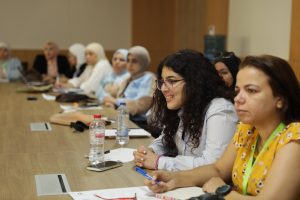
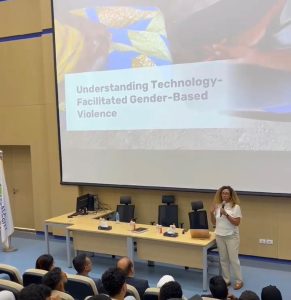
Galala University convened students, faculty, and external experts at Auditorium 2 for a focused seminar on “Cyber Violence Against Women and Cybersecurity.” The session addressed the fast-growing forms of online harm that disproportionately target women—including image-based abuse, blackmail, impersonation, cyberstalking, and coordinated harassment—and translated complex legal and technical concepts into clear, practical guidance students can apply immediately.
The program opened by framing cyber violence as both a rights issue and a public-safety challenge. Speakers unpacked how digital behavior, platform architectures, and social norms interact, and why online abuses have real-world consequences for mental health, learning, careers, and community safety. From there, the seminar moved into a toolkit mindset: what to recognize, how to respond, and where to seek help.
Key learning blocks:
-
Recognize & Document: spotting red flags (sudden access requests, coercive messaging, doxxing attempts), preserving evidence safely (screenshots with timestamps, metadata retention, not altering original messages), and understanding when behavior crosses legal thresholds.
-
Protect & Prevent: password hygiene and passphrases, multi-factor authentication, privacy settings by platform, safe device practices, and minimizing data trails across social and messaging apps.
-
Respond & Report: immediate containment steps (revoking app permissions, changing credentials, isolating devices), platform reporting workflows, and referral routes to specialized support and law-enforcement units.
-
Care & Support: trauma-informed communication, bystander intervention online, and campus/community resources for psychosocial support and legal guidance.
Distinguished speakers brought complementary perspectives:
-
Dr. Sally Zehani (UN expert and women’s rights advocate) connected global GBV frameworks to everyday student realities, emphasizing survivor-centered, do-no-harm approaches.
-
Prof. Tamer Nasif (MSA University, Computer Science) outlined technical controls—from MFA and hardware tokens to device hardening and secure backups—plus pitfalls in “shadow IT” and oversharing.
-
Dr. Ali Abaza (Ph.D. Criminal Forensics; former Director, Cyber Investigations Unit, Ministry of Interior) detailed how evidence chains, incident triage, and specialized units operate, clarifying what strengthens a case and what can jeopardize it.
-
Dr. Rania Soukrat (Assistant Professor, CIC; Head of the Economic Secretariat, Party Conference) discussed policy, digital economies, and why safer online spaces are a prerequisite for women’s participation in entrepreneurship and public life.
-
Prof. Doaa El-Sirafy (Psychiatry, Galala University / Ain Shams University) addressed the psychological toll of cyber harassment and practical coping strategies, including peer-support models and when to escalate for clinical care.
Throughout the seminar, faculty moderators linked insights back to coursework in computer science, law, public policy, and psychology—underscoring Galala University’s commitment to applied learning that blends technical skill with ethical responsibility. Scenario walk-throughs gave students a chance to practice decisions: handling a blackmail attempt, supporting a classmate who’s being impersonated, or reporting a compromised account without amplifying harm.
The event situates cybersecurity within a broader culture of dignity and equality. By equipping students with prevention habits, response playbooks, and clear referral pathways, the seminar advances campus safety and digital citizenship while fostering partnerships among academia, civil society, and public agencies.
In SDG terms, the outcomes map to sdg5 (Gender Equality) by tackling gendered online abuse, sdg4 (Quality Education) through skills-based learning, sdg10 (Reduced Inequalities) by improving access to protection and redress, sdg16 (Peace, Justice, and Strong Institutions) via legal literacy and reporting mechanisms, and sdg17 (Partnerships for the Goals) through multi-stakeholder collaboration.