
Meeting of the Nursing Sector Committee – Supreme Council of Universities
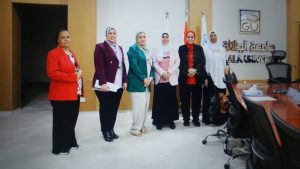
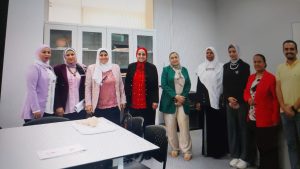
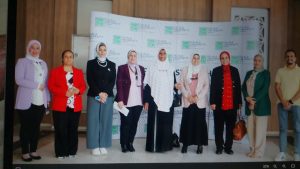
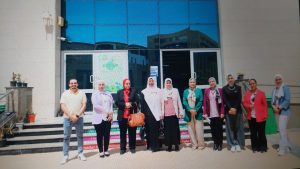
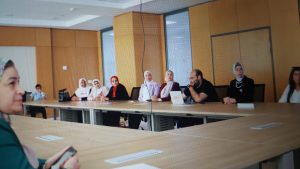
Galala University hosted the Nursing Sector Committee of the Supreme Council of Universities in a virtual session held via Microsoft Teams to review quality assurance and accreditation standards and examine proposals for new nursing programs. The meeting gathered senior academic leaders and external reviewers to align curricula, training hours, and clinical competencies with national benchmarks and international best practice—an essential step in safeguarding patient safety and elevating graduate readiness for Egypt’s healthcare system.
The session brought together:
-
Dr. Marwa Mostafa Ragab Mohamed, Dean, Faculty of Nursing, Benha University
-
Dr. Amal El-Sayed Shehata, Dean, Faculty of Nursing, Menoufia University
-
Dr. Ghada El-Gendy, Vice Dean, Faculty of Nursing, Badr University in Cairo
Over the course of the meeting, participants examined program learning outcomes, clinical placement frameworks, student–preceptor ratios, and assessment rubrics used in core courses such as adult health nursing, community health, pediatrics, and mental health. Particular attention was given to simulation-based learning—scenario design, manikin utilization, and debriefing methods—to ensure students acquire high-stakes skills in safe environments before entering hospital wards.
The committee also reviewed documentation related to governance, including internal moderation processes, periodic program review cycles, and stakeholder feedback mechanisms that incorporate hospital partners, faculty, students, and alumni. Recommendations emphasized: (1) clearer mapping of course outcomes to national competency frameworks; (2) formalizing clinical site agreements with defined supervision standards; and (3) expanding digital learning resources to support evidence-based practice and continuous professional development.
From a quality assurance standpoint, Galala University presented updates on faculty development hours, calibration workshops for OSCE stations, and planned upgrades to the skills and simulation labs. The discussion underscored the importance of data-driven improvement—tracking indicators like clinical logbook completion, licensing exam performance, and graduate employment—to ensure that program enhancements translate into better learning and, ultimately, better patient care.
The meeting reaffirmed the sector’s collective commitment to strengthening nursing education through collaboration and transparency. By converging on common standards and sharing practical solutions, the committee is helping universities maintain rigorous academic delivery while responding to the evolving needs of Egypt’s healthcare providers. These outcomes directly advance sdg3 (Good Health and Well-being) through safer, higher-quality care; sdg4 (Quality Education) via competency-based curricula and assessment; and sdg17 (Partnerships for the Goals) by coordinating efforts among universities, clinical partners, and regulators.