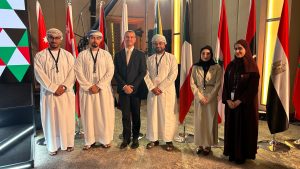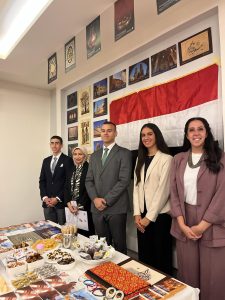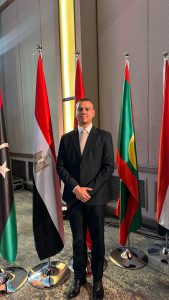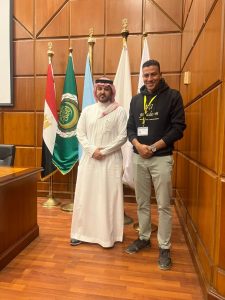
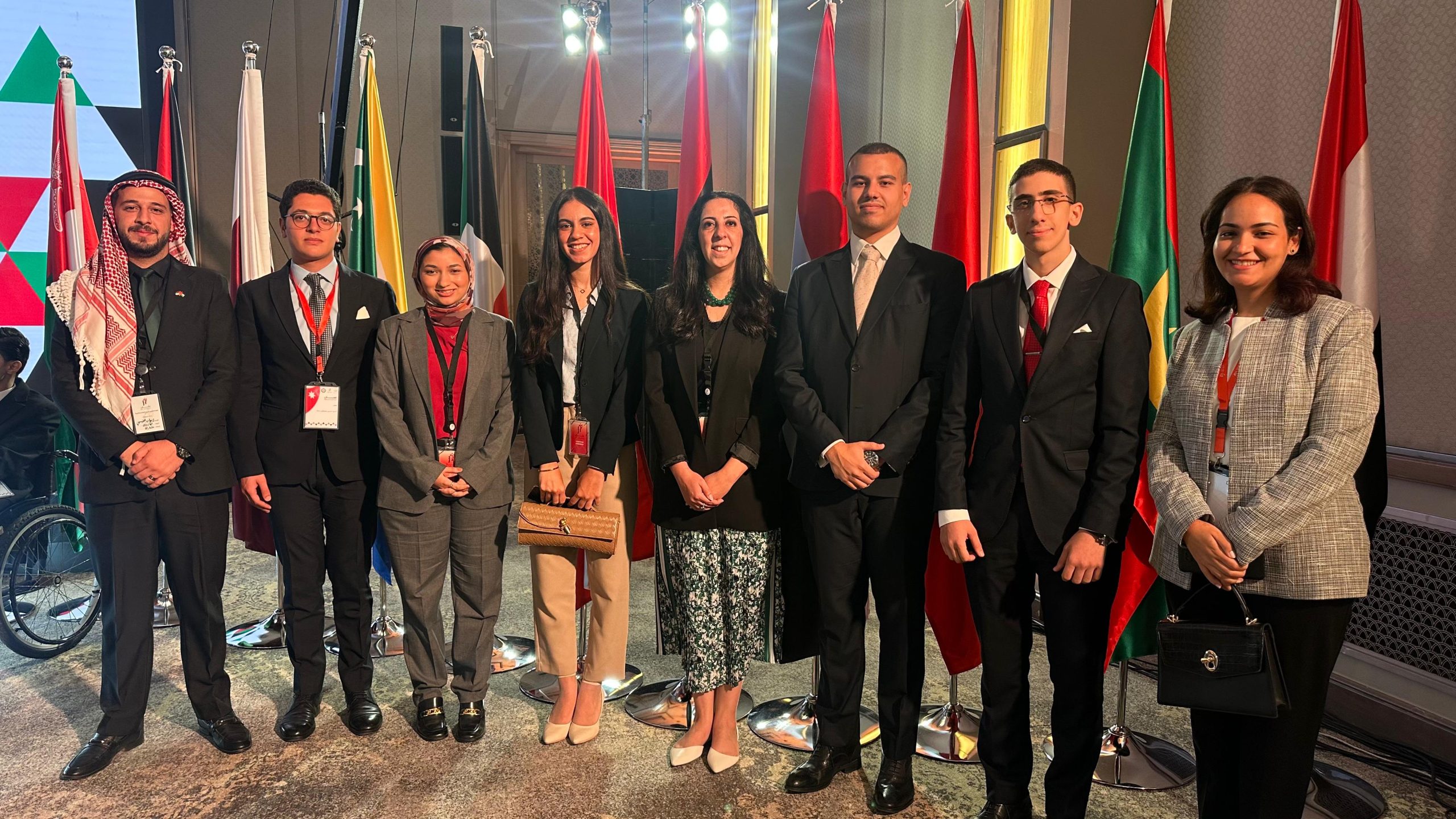
Galala University Student Represents Egypt at the Arab Youth Forum – “Youth and Economic Empowerment in Light of Contemporary Changes”
Not every medical student spends a week debating youth policy with ministers and regional leaders. Samer Tarek, from Galala University’s Faculty of Medicine, did exactly that—representing Egypt at the Arab Youth Forum in the Hashemite Kingdom of Jordan, where this year’s theme focused on “Youth and Economic Empowerment in Light of Contemporary Changes.” The forum also marked the launch of “Amman: Capital of Arab Youth 2025” and the Arab Strategy on Youth, Peace, and Security, placing young voices at the center of development priorities.
Samer’s role went beyond attendance. In policy labs and roundtables, he contributed a student–clinician’s view on how economic empowerment intersects with public health: community health startups creating jobs while expanding access to services; evidence-based volunteering that builds employability; and the importance of digital skills—data literacy, telehealth workflows—for a workforce that must adapt quickly. His interventions stressed three practical levers for youth policy:
-
Skills that match markets: embed entrepreneurship and digital competencies inside degree programs—especially in health, where service design and data ethics are now core skills.
-
Equitable access to opportunity: scholarships, internships, and mobility programs that reach talent outside major cities so the “youth dividend” is truly nationwide.
-
Peace and institutional trust: youth engagement channels that translate community needs into policy pilots, reducing friction and creating room for innovation.
“Empowerment is measurable,” Samer noted in one session. “Track internships completed, projects launched, and community outcomes—then scale what works.”
The forum provided a dense learning arc: plenary exchanges with regional organizations, workshops on social entrepreneurship and financing, and networking with peer delegates working on tech-for-good, climate action, and public-sector modernization. For Galala University, Samer’s participation reflects a broader approach—leadership formed through practice. Students are encouraged to carry their disciplines into civic spaces, defend ideas with evidence, and return with partnerships that open doors for the next cohort.
Back on campus, Samer will brief student clubs and the International Cooperation Unit, distilling forum takeaways into actionable steps: a micro-fellowship track for public-interest projects; clinic-style mentoring hours that help peers translate ideas into proposals; and a set of recommended metrics for student-led initiatives (reach, inclusion, and real-world impact). The university will also leverage new contacts from the forum to strengthen exchange opportunities and regional collaborations, aligning with national strategies for youth empowerment and sustainable development.